Robotic-Assisted Surgery with hinotori™
Japan’s First Home-Grown Surgical Robot, Born in Kobe
Kobe University Hospital is one of Japan’s leading centers for robotic-assisted surgery and played a central role in the clinical development and advancement of hinotori™, Japan’s first domestically developed surgical robotic system.
More than an advanced surgical platform, hinotori™ represents a unique achievement in Japanese medical innovation—bringing together academic medicine, engineering, and industry to create a next-generation robotic surgery system developed in Japan and now used throughout the country.

The Story Behind hinotori™
Development of hinotori™ began in 2015 through a collaboration among Kobe University surgeons, Medicaroid Corporation, Kawasaki Heavy Industries, and Sysmex Corporation.
Medicaroid, headquartered in Kobe, was established through the combined expertise of Kawasaki Heavy Industries, a global leader in robotics and precision engineering, and Sysmex Corporation, one of the world’s leading medical technology companies.
The vision was ambitious: to create a Japanese robotic surgical platform capable of supporting highly precise minimally invasive procedures while advancing the future of surgery.
After five years of development, hinotori™ received regulatory approval in Japan in 2020.
The first patient surgeries using hinotori™ were performed at Kobe University Hospital’s International Clinical Cancer Research Center (ICCRC), marking the beginning of clinical application of Japan’s first domestically developed surgical robot.
Since then, Kobe University Hospital has remained deeply involved in clinical research, surgeon training, procedural development, and the continued evolution of robotic surgery.
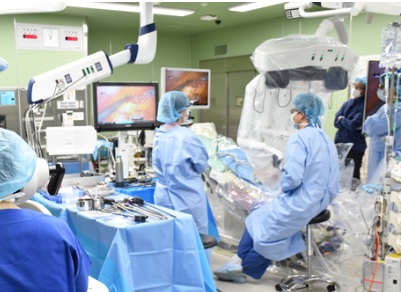
The first surgery using hinotori™- Dec 14, 2020
More than 100 hinotori™ systems have been installed across Japan
What began as a vision shared by Kobe University and its industry partners has grown into a nationwide surgical platform.
Today, more than 100 hinotori™ systems have been installed across Japan, and more than 10,000 robotic procedures have been performed using the technology.
This achievement demonstrates the confidence placed in the system by surgeons and hospitals throughout the country and highlights the success of a technology that originated in Kobe.
Expanding Surgical Applications
Initially introduced for urologic surgery, hinotori™ has steadily expanded into additional surgical specialties.
Current clinical applications include:
- Urology
- Gastrointestinal Surgery
- Gynecologic Surgery
- Thoracic Surgery
The continued expansion of approved indications reflects the growing versatility and clinical value of the platform.
At Kobe University Hospital, robotic-assisted surgery continues to evolve through multidisciplinary collaboration, clinical research, and the development of new surgical techniques.
Benefits of Robotic-Assisted Surgery
For appropriately selected patients, robotic-assisted surgery may offer several potential advantages compared with conventional open surgery.
These may include:
- Smaller incisions
- Reduced blood loss
- Less postoperative pain
- Lower risk of wound complications
- Faster recovery
- Earlier return to daily activities
- Shorter hospital stays in many cases
- Improved cosmetic outcomes
The suitability of robotic surgery depends on each patient’s condition and treatment plan.
Innovation Supported by Kobe’s Biomedical Ecosystem
The success of hinotori™ reflects the strength of Kobe’s internationally recognized biomedical innovation environment.
The project united:
- Kobe University Hospital
- International Clinical Cancer Research Center (ICCRC)
- Medicaroid Corporation
- Sysmex Corporation
- Kawasaki Heavy Industries
- Kobe Biomedical Innovation Cluster
This collaboration combined clinical expertise, medical research, robotics engineering, and advanced manufacturing to transform a vision into a nationally adopted surgical platform.
Few medical centers in the world can offer patients treatment using a robotic system that was developed through the direct involvement of their own surgeons and researchers.
Why Choose Kobe University Hospital?
Kobe University Hospital offers patients access not only to advanced robotic technology, but also to the institution that helped bring that technology from concept to clinical reality.
By combining surgical expertise, academic medicine, medical innovation, and patient-centered care, Kobe University Hospital continues to lead the advancement of robotic-assisted surgery in Japan and contribute to the future of minimally invasive treatment worldwide.