
2025 Academic Year
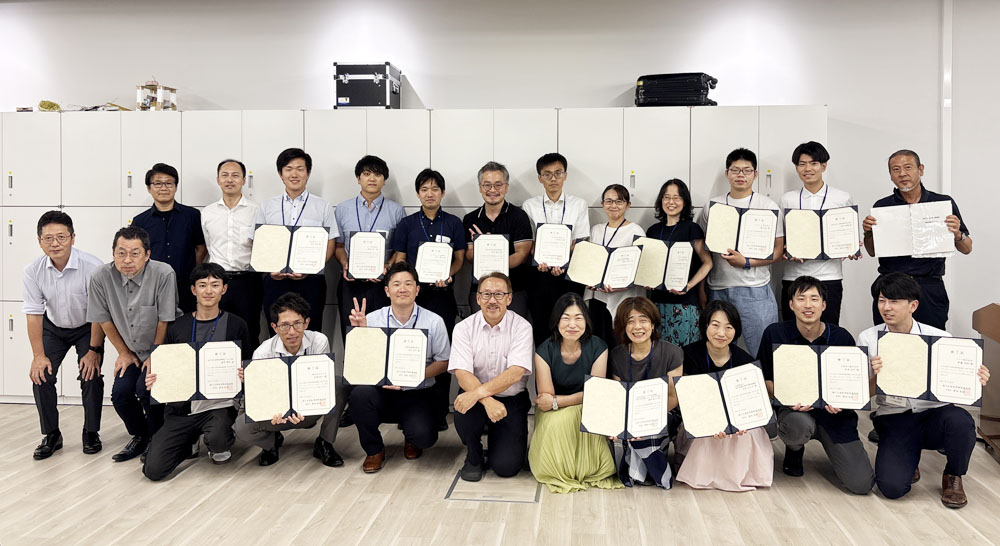
From May 30 to July 25, 2025, the course was conducted with 16 trainees in a program designed to mentor them in the fundamentals of the medical device development process—from needs exploration to concept generation —through a series of 7 Needs Exploration Approach Workshop (WS), Hands-on Seminars, and Team-Building Workshop.
This year’s Hands-on Seminar was organized along with a tour of the Medtech Innovation Center (MIC), which opened in October 2024. MIC also has Edulopment Laboratories (education-and-development integrated laboratories) and a medical device workshop equipped with state-of-the-art engineering and medical equipment and technology.
*10 from companies, 4 healthcare professionals (including 2 working graduate students), 1 development support specialist, 1 undergraduate student from the Faculty of Agriculture.

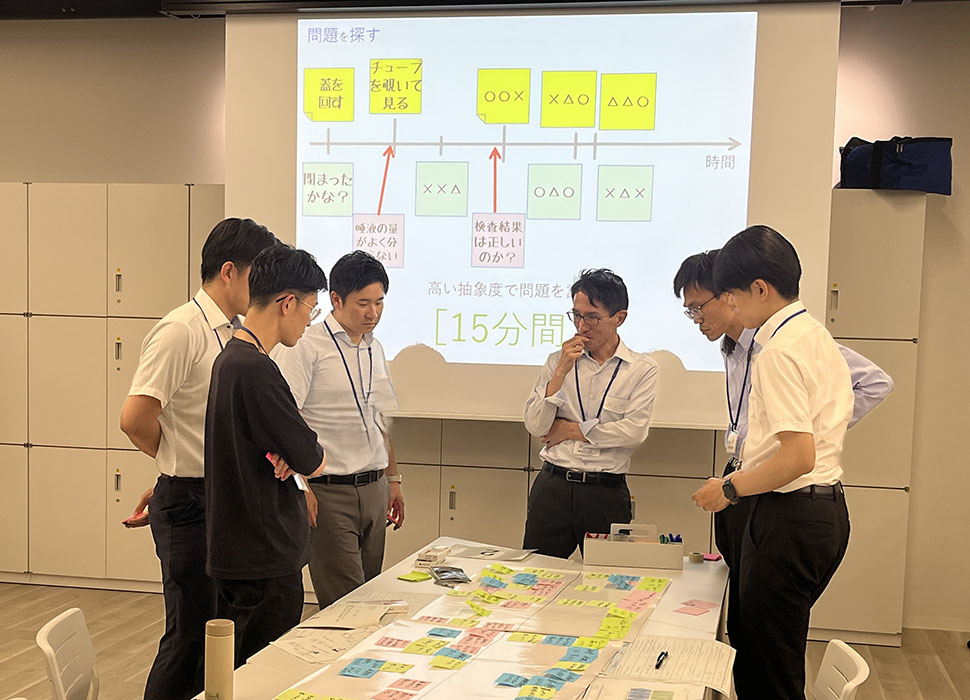
・I found it valuable to learn both the concepts of design thinking and the frameworks for how to approach problem-solving. I was impressed with the method of raising and lowering the level of abstraction plan to actively apply it in my own projects and research.
・The lectures provided many perspectives on medical device development, and using them in group work helped me organize what I had learned. Even when I felt unsure about certain points, discussing them within the group deepened my understanding. At the same time, I realized how difficult it can be to align a group’s direction and accept differing opinions while still moving forward.
・Experiencing the hands-on methods made it easier to understand them physically and intuitively. However, I also had moments when my thinking was blocked by assumptions or preconceived notions and trying to resolve that internal dilemma was tiring. I felt as though I was using parts of my brain that I don’t normally use, which was quite an interesting experience.
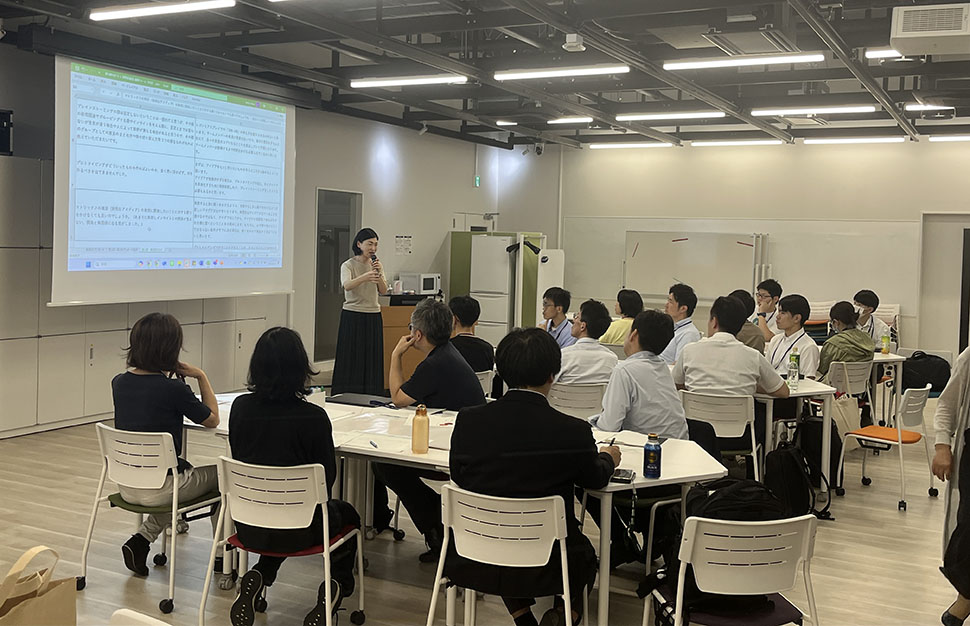
・Although I was aware of the concept of design thinking, I had never studied it in depth, so this was an extremely valuable opportunity. In my work, I rarely have the chance to do a needs exploration and evaluations tend to focus mainly on product performance. This workshop taught me what is necessary to gain meaningful insights and how important it is to evaluate products through actual user experience. While the explanations made the methods themselves easy to understand, it was challenging to translate them into concrete actions for the specific tasks. Additionally, differences in understanding and in the scope of thinking among group members made it difficult at times to progress through the exercises.
・The ability to compare monopolar and bipolar devices through hands-on use helped me understand the sensory differences that I could not understand just from the theory alone. I was also surprised to see the explosive-like phenomenon produced when using an electrosurgical knife, which amazed me with its power and precision. At the same time, when I tried using it myself, my hands shook from nervousness and I could not use it properly. However, the instructor handled it smoothly and accurately. This made me realize the high level of skill that doctors have.
・Although the goggles made it difficult to see at times, I also realized, as Professor. Kido pointed out, that I was not observing carefully enough. I was unable to expose a blood vessel with the CUSA or to cut it with the THUNDERBEAT. Even though the doctors can perform these tasks effortlessly, I found that the finger movements required were surprisingly intricate.
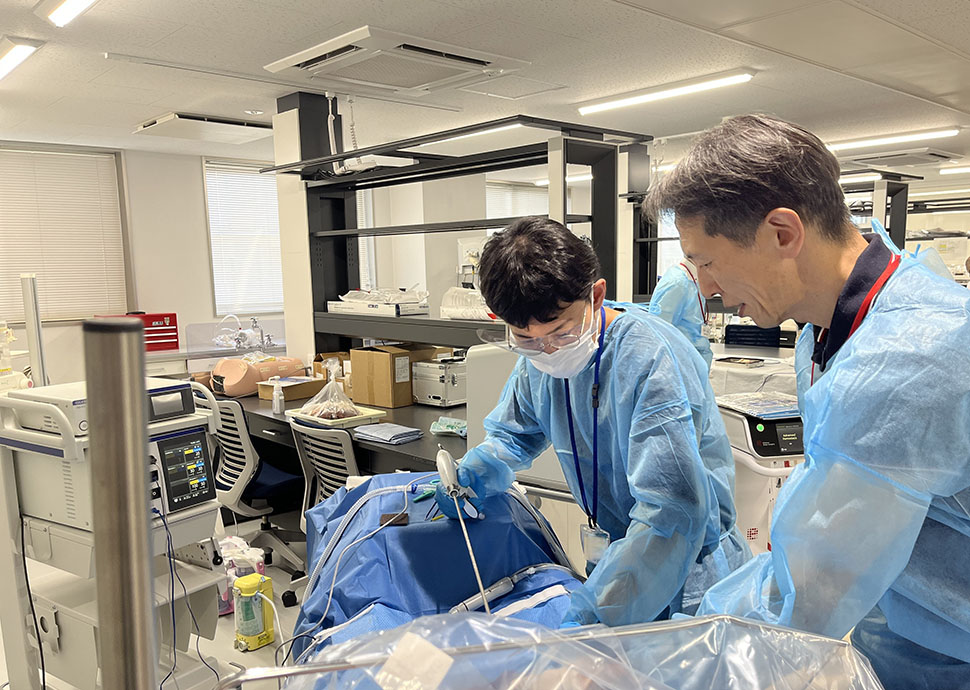
・Using different surgical instruments made me realize the value of combining multiple functions into one single device, especially given the variety of surgical methods that exist. When we practiced using an electrosurgical knife on both liver and a chicken thigh meat, and I found it interesting that it didn't feel like the tissue was being cut by energy—it felt more like splitting by the tip of the metal blade. With the CUSA, energy acted only on non-vascular tissue, leaving it with a hollowed-out appearance, which was intriguing. Because the CUSA includes a suction mechanism, the handle felt heavy, making it difficult to maintain the appropriate angle and stability. I learned that in surgery, the operability of energy devices can be limited by their functional design.
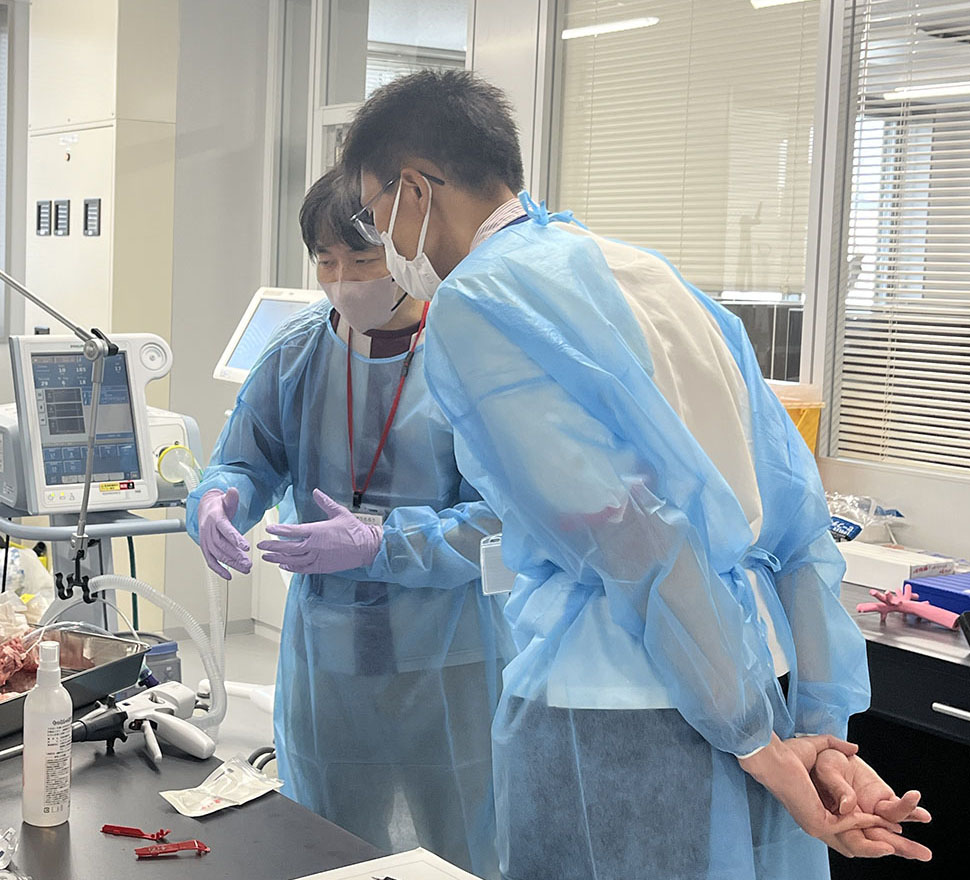
・It was difficult. I could realize firsthand that even a single misstep could lead to a serious accident.
・I had never actually seen lungs expanding before, so it was surprising to realize how much they can inflate. Mechanical Ventilator settings seemed complicated and could be prone to errors, so I feel there is still room for improvement. It was also my first time to see suturing done with a stapler. While I was impressed by how much time it saves, prevents leaks, and its dynamic approach, however, it left me with questions on how the stapler could be used for patients with stiff lungs, or how it could be applied not just at the periphery but also in the middle of the lung.
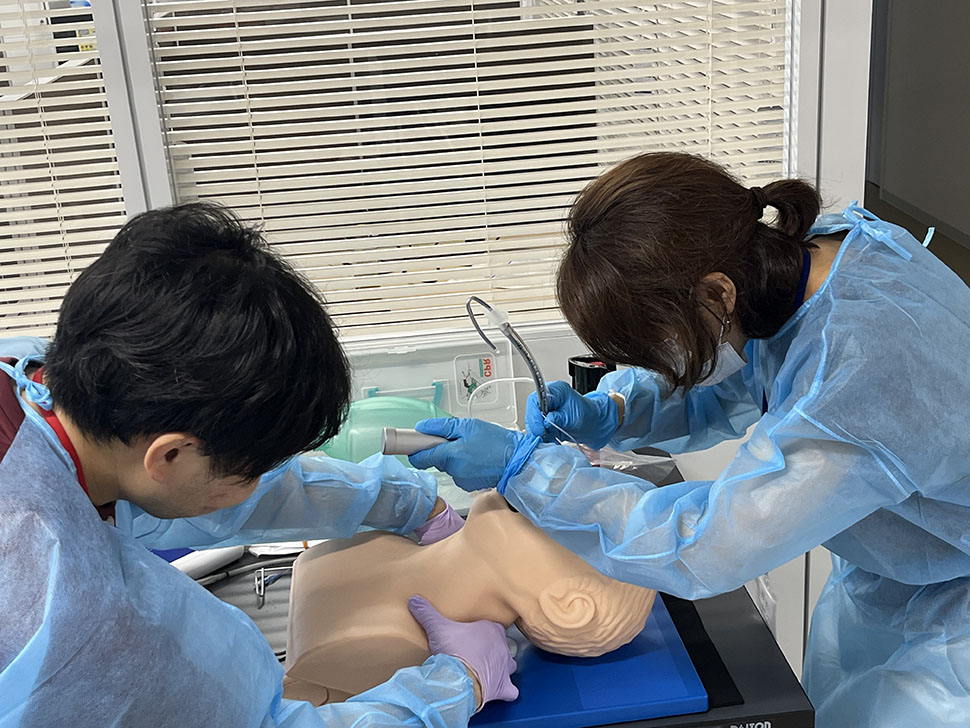
・Since I was only familiar with the older type of laryngoscope, I was very surprised by how innovative it was to have a monitor attached. In real clinical settings, an airway edema and other factors make things far from straightforward, but during sudden deterioration, every second counts. Being able to intubate easily not only helps reduce medical accidents but also makes the process less dependent on individual experience, so I felt it was extremely valuable. I also thought that having voice guidance—for issues like pushing too much—would make it even safer.
・During the tracheal intubation practice using a mannikin, I realized that using conventional devices made it difficult to get a clear view, and I experienced firsthand the problem of repeatedly breaking the teeth. Sometimes when the tracheal tube was mistakenly inserted into the esophagus, I understood how difficult it really is to accurately insert the tube in the trachea.
In contrast, even though there were some problems using the new camera-equipped device, such as teeth breaking during insertion, getting a good visual field became significantly better. That made it much easier to insert the tube correctly into the trachea. Through this experience, I learned about the difference between use a in real clinical settings and the importance of improved operability that new devices bring. The realistic reactions of the manikin, including simulated gag reflexes, were also impressive, allowing me to experience by simulation, the difficulty and tension of actual clinical practice. It was an extremely valuable experience.
・It was easier to use than I had imagined. One issue I personally noticed right away was that I couldn’t really feel any tactile feedback when grasping an object. I expected that using this device would require a high level of skill, and I am also curious whether physicians would actually feel the need for it in practice.
・We were given an explanation of how large medical devices generate profit and what kinds of algorithms are used to suppress vibrations and other mechanical movements. I learned many things I had never encountered before, and I hope to make use of this knowledge in the future. Thank you very much.
・I had only experienced simple operations, but this program changed my impression of the hinotori™ completely. From the promotional images and the phrase ‘Surgical Robot System’, I had assumed it would be extremely difficult and something only a select few could handle. However, I found that I could operate it intuitively, and perform delicate movements just like those shown on the actual monitor.
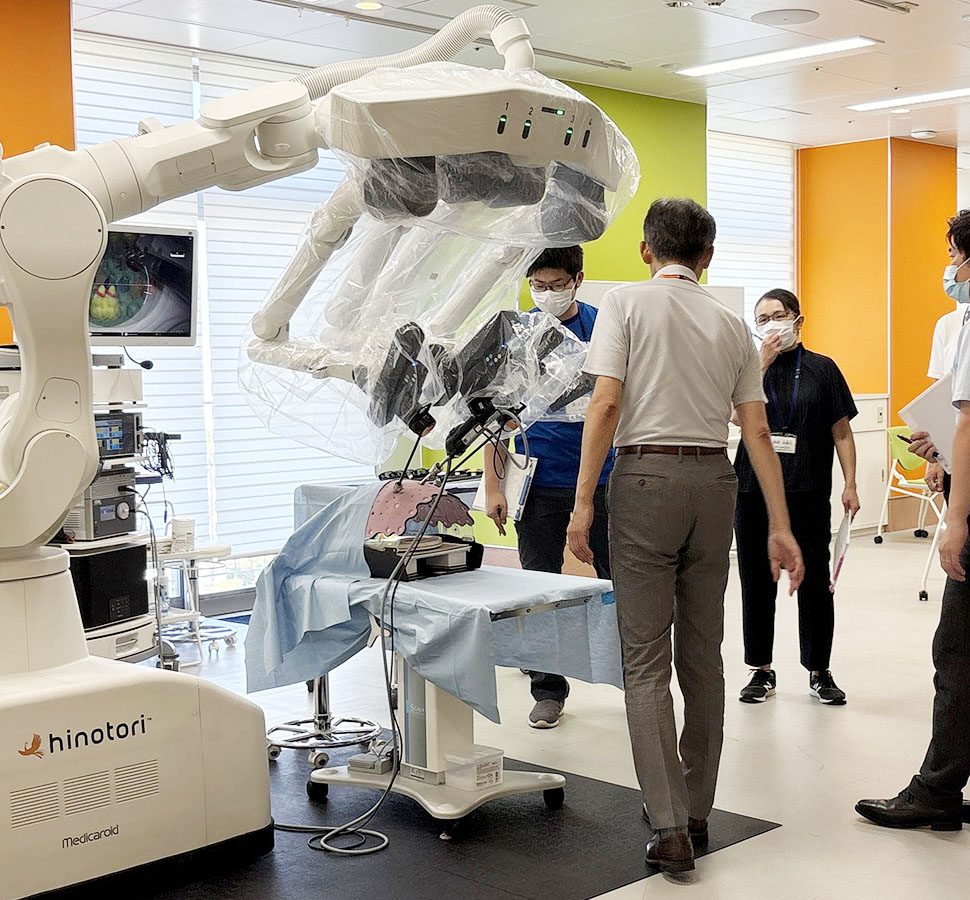
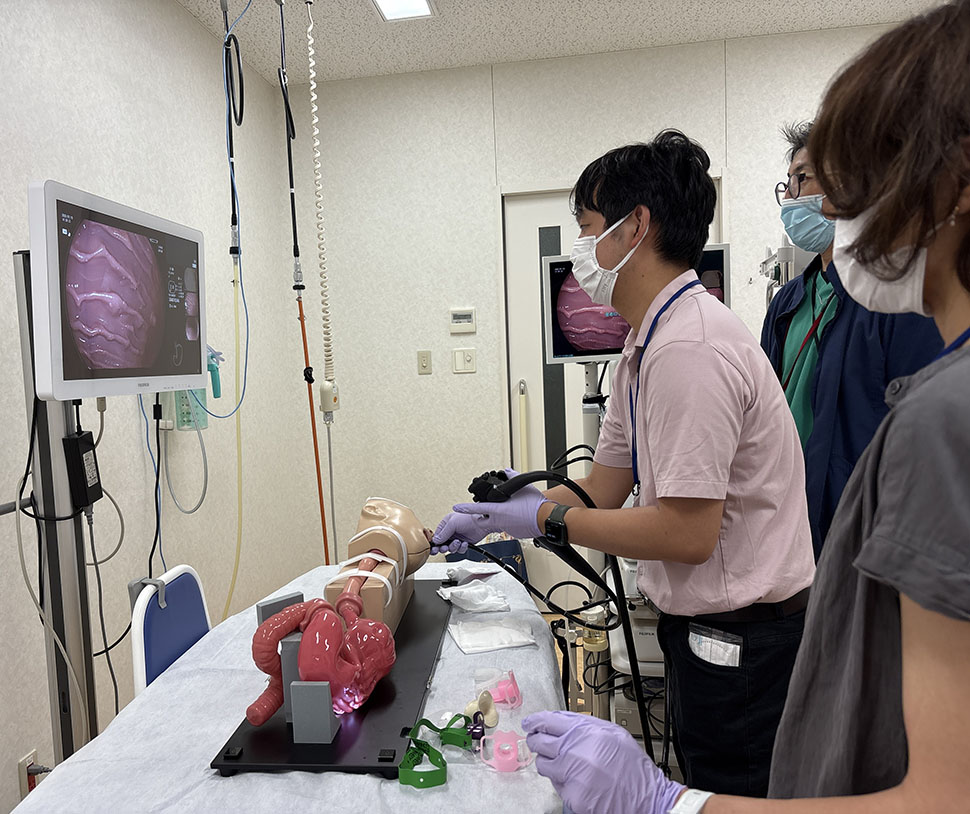
・Compared to the hinotori™, operating the endoscope was extremely challenging. I lost track of where the endoscope actually was and which direction it was facing. The handle used to operate the endoscope was also hard to use—partly because my hands are on the smaller side and my fingers could barely reach—so it was difficult to use from the very beginning. It made me realize how challenging it is to design medical devices that are easy for everyone to use.
・Even though my hands are relatively large and I have a fairly strong grip strength, I still found the controller quite difficult to operate. I thought that having a method to fix it beside the patient’s bed could be an option.
・Because I experienced the hinotori™ system first before the endoscope, I was surprised by how difficult the endoscope was to operate. In the endoscopy waiting area, I learned that the endoscopy waiting area is intentionally spacious to allow for patient transport after anesthesia, which gave me insight into the practical considerations of real clinical settings.
・From a layperson's perspective, it seems that simply having endoscopic instruments or laparoscopic forceps with 90-degree angled tips would make procedures significantly easier. However, whether physicians are not requesting it or it's technically challenging, I felt the gap between such basic improvements and cutting-edge devices like hinotori™ is far too large.
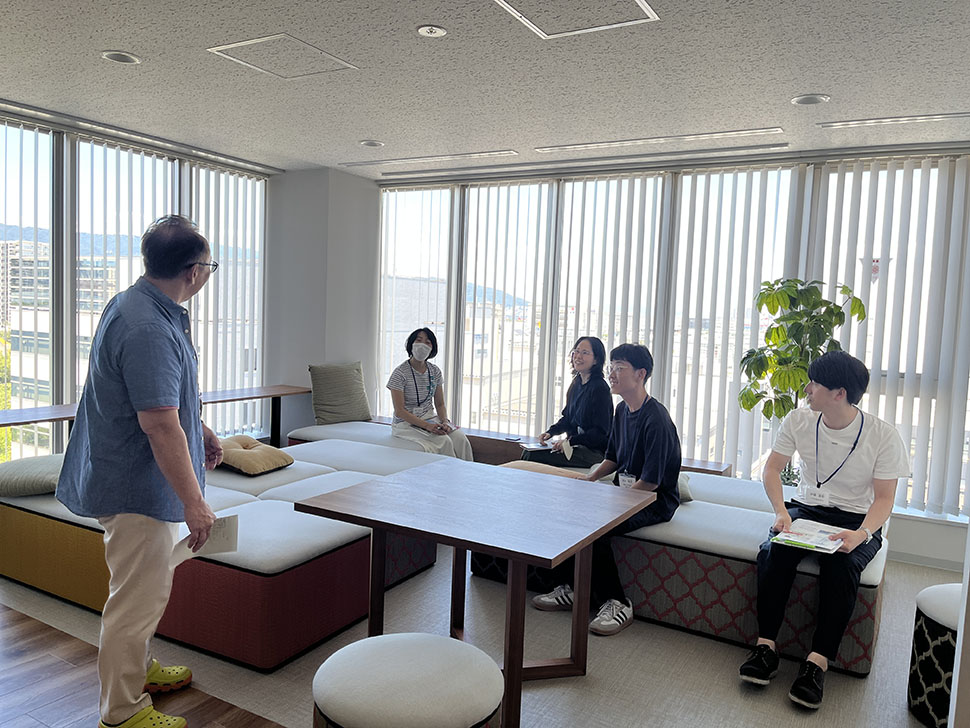
・The space, also usable for workshops, features open areas designed to encourage communication on each floor with varied layouts. Numerous thoughtful touches were evident to foster active interaction. The workshop was equipped with various devices, providing an environment ready for hands-on activities like prototyping medical devices. I couldn’t try all the functions of the digital dissection table, but it seemed versatile and I wished I had more time to explore it.
・I could strongly relate to MIC's concept. The digital dissection table was also what most captured my interest. As more companies move in and the facility gains a track record of activity, I believe it will attract even more people.
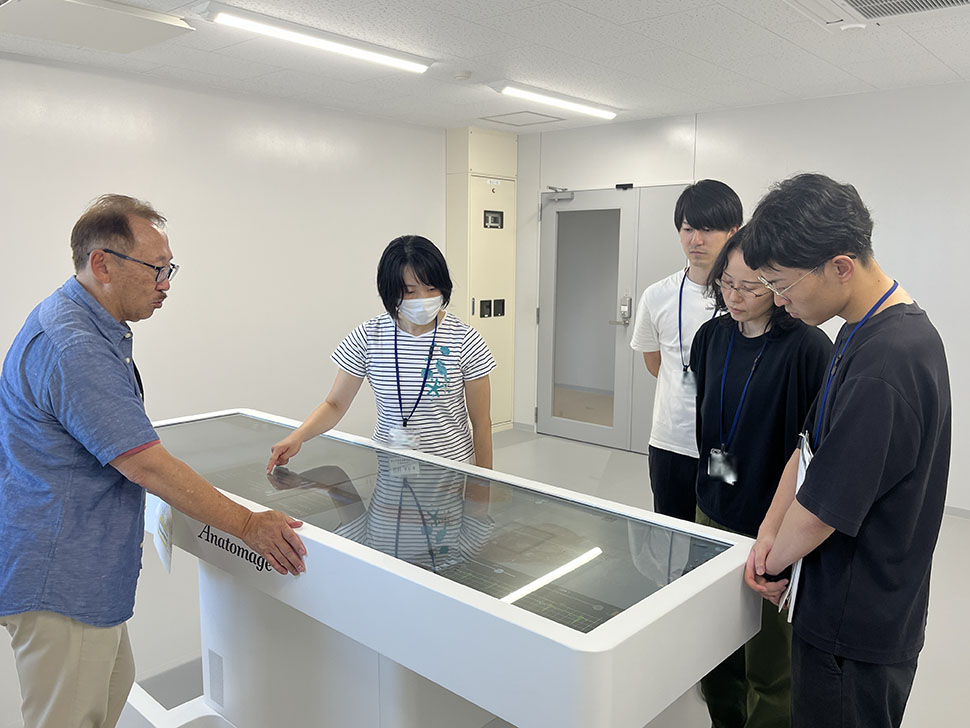
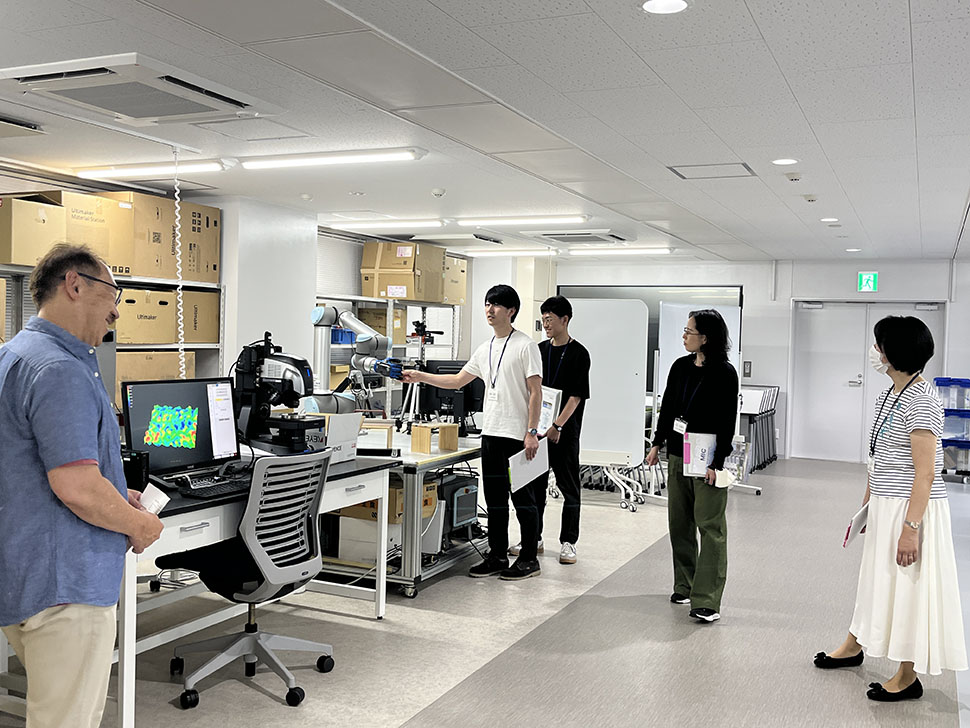
・I was very impressed by the professor’s enthusiasm. I was amazed by the volume of materials and analysis data from various fields for the human body digital data using donor data. I have heard that “playing” is one of the most effective ways to learn something, and I felt it would be ideal if medical professionals could engage with the device freely and without time constraints, rather than only learning about it through lectures. From that perspective, I felt that this is a place where many advanced devices are concentrated, and the system allows users to immerse themselves fully—even from trial operation—without time limits.
・I had the exciting opportunity to be guided by Professor. Yasuda. The facilities are extremely well-equipped, and I felt it would be fascinating to work at MIC. I also thought that if dealers like our company could be involved alongside manufacturers, even more opportunities could emerge.
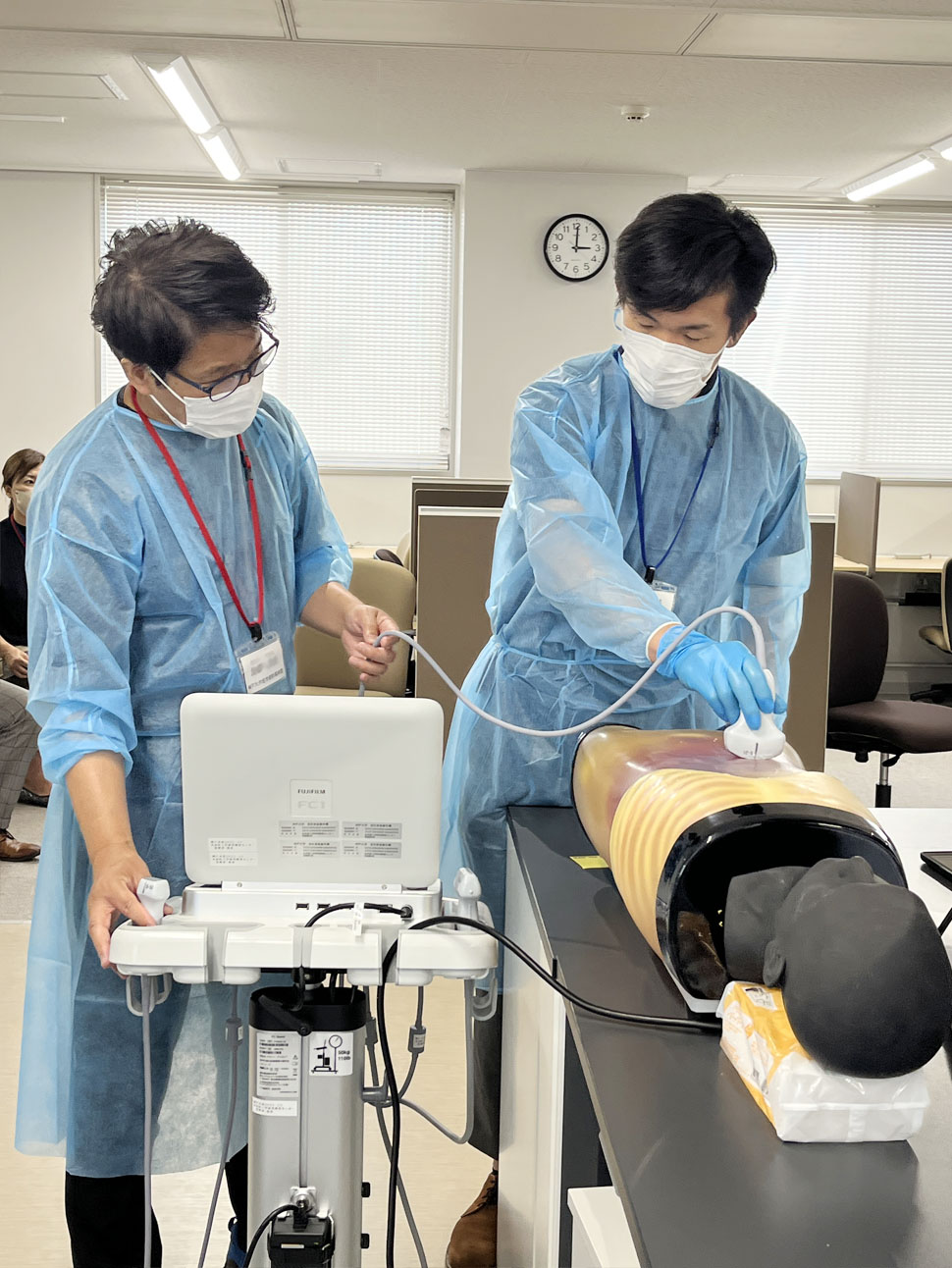
Ultrasound Imaging Devices(Echo)

Endovascular Treatment

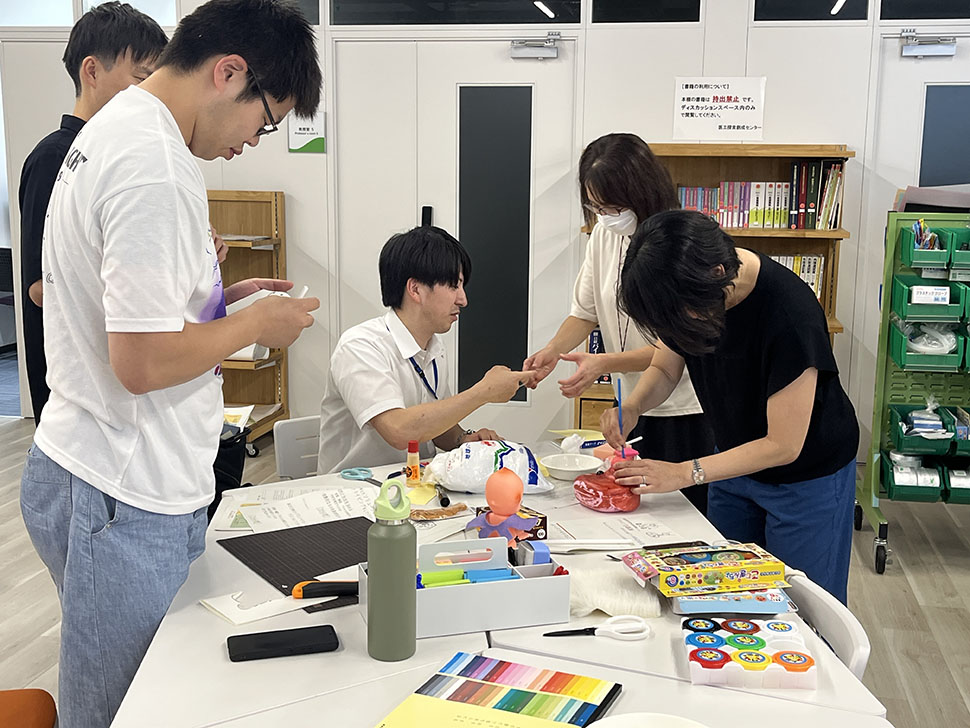
・To be honest, it was fun to play with LEGO again after a long time, and I also felt the challenge of creating something under time limits and with limited parts. When thinking about something, I think I got quite a bit of practice in using my hands and mind together—just trying things out, assembling the pieces.
・Given the diverse backgrounds of MDP Course I participants, LEGO bricks served as a common language among attendees, making communication feel easier. Furthermore, the ability to capture each participant's ideas as tangible creations (shapes) using LEGO bricks allowed us to display and discuss everyone's ideas (creations) together. This proved highly valuable as an icebreaker for the two-month course.
・I realized that there are tools even in settings like this to express one’s own thoughts, and the process of recognizing narratives I hadn’t been aware of felt somewhat like undergoing psychotherapy. Experiencing that made me very interested in what my team members’ statements contained—their personal narratives were fascinating. At the same time, I felt that this method is remarkable in how it allows one to quickly understand another person’s mindset and show respect for them.

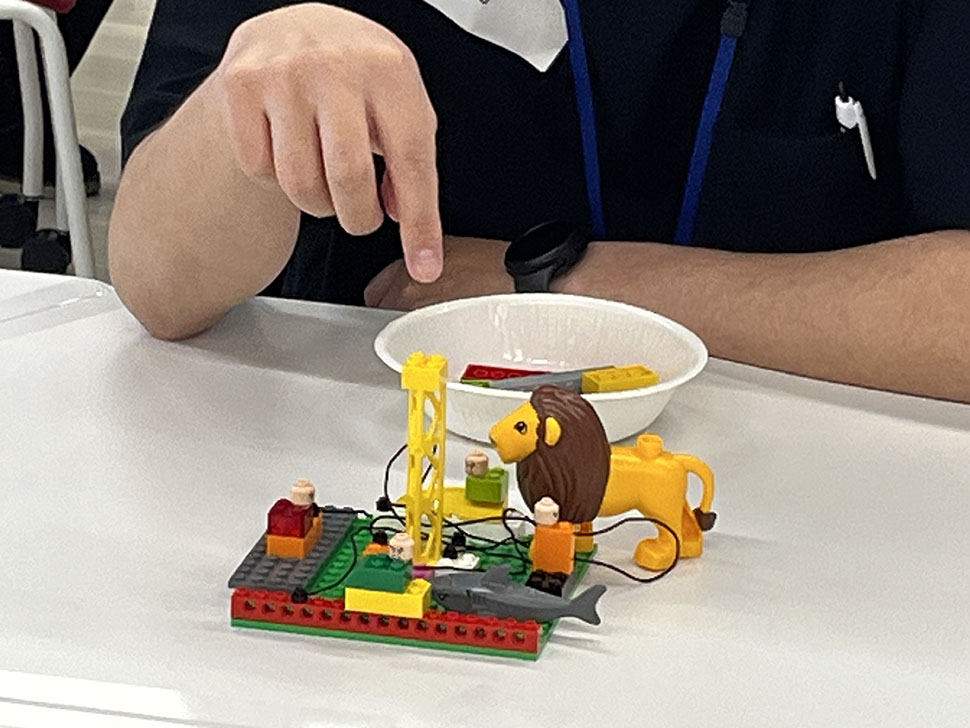
・I believe that speaking up requires thinking about something and processing your thoughts. Considering that two points underpin a system that allows everyone to speak up: 1. LEGO block assembly forces people to think about something, and 2. LEGO blocks are physical elements that inevitably form some kind of shape. I felt this tool could be meaningful for various types of people—those who usually don't speak up, those who struggle to organize their thoughts, and those who find it difficult to identify a starting point for thinking. Initially, I thought writing on sticky notes might achieve the same effect, but I came to appreciate the importance of having a tangible, physical object. I found it particularly useful when a team hit a deadlock or needed to pivot on strategy.
・Using this method, I understood that even people who struggle with speaking up can create (express) something, that they can think through their hands, and that this approach is possible. What particularly stuck with me was the part where each member used their own non-negotiable block to create a piece. I learned that powerful teamwork can be built not by adopting the opinions of the loudest voices, but by incorporating everyone's ideas. While true equality is impossible, I want to build a team that incorporates everyone's opinions as much as possible.
・I still haven’t quite reached the “starting line” of medical device development of the healthcare industry, but I feel that I’ve grasp it a little more clearly.
・Until now, I tended to form negative impressions of people whose opinions differed from my own, and I focused only on immediately adjusting them. Through the MDP, I was able to reflect on myself and create space to accept other viewpoints. I also realized that the MDP, which involves looking ahead to plan, steering projects while considering the perspectives of various sectors—specialized companies, healthcare professionals, government agencies, and others—actually plays a crucial role in leading medical device development to success. This overlaps with my current responsibilities, and I now want to approach my work not merely as a coordinator but with the awareness that I am “a member of the medical device development team.”
・I have become more aware of the level of abstract concepts being used in project meetings. Previously, I never paid attention to this, so I would talk about specific methods even when the discussion was happening at a high level of abstract concept. After taking the course, I have started to recognize the different levels and I can now understand which level we are discussing. However, the higher the level we move to, the easier it becomes to lose sight of what we were originally trying to do. So, I still find it difficult to freely move between different levels of abstract concept while keeping the overall hierarchy in mind.
・I feel that I can continue to improve myself, but my current level of understanding is not yet enough to influence or change the environment within my company.
・I have become more aware of the overall flow. Because Japanese-style education and work practices tend to be disconnected from design thinking processes, this course helped me clarify the flow in my own mind.
・First, understand your own weaknesses and thought patterns. While I'll leave matters to those skilled in their respective fields, I've come to believe in actively working to loosen my own rigid ways of thinking. Having never considered this as I grew older, it's a new discovery. I want to cultivate flexible thinking, not become set in my ways by relying solely on experience.
・By regularly presenting something we felt was “innovative” at the beginning of each session, I feel that I have become more aware of interesting things in my daily life—things I see or sense around me. I also feel that I have gained more openness to accepting others’ opinions and not rejecting them.
・I developed the habit of questioning things—wondering if they were really true—and considering the underlying psychology, and I became conscious of not rejecting things outright whenever possible, and seeking a point of agreement based on the collective will rather than majority rule.
・In my thinking process, I have started asking: What needs does the other person have? What values are they really searching for? I have begun taking actions to draw this out through conversation and asking questions.
・The main change I feel before and after taking this course is that I have become more conscious about actively communicating even with people from different specialized fields. Everyone thinks differently, but unless you communicate your thoughts, you cannot know how much the other person understands about a given topic. Through repeated discussions, I realized that the key to cross-disciplinary collaboration is how quickly and appropriately you can adjust the conversation to match the other person’s level of understanding.
・I have come to place greater importance on creating an environment that makes it easy for group members to exchange opinions when working together. In particular, when discussing with people who bring a fresh perspective, I have become more mindful of creating a space where they feel comfortable speaking up and where their ideas can be reflected.
・Before taking the course, I had many fixed ideas and was not very interested in others, but I have learned to take an interest in people. Through the training, I actively communicated with people I had never interacted with before, got to know them, and allowed them to get to know me as well, which led to building closer relationships. As a result, I also gained more opportunities to take on new work. This has truly been a major change for me.
・My awareness of the need to increase collaboration with medical stakeholders has grown stronger.
・I realized the importance of the four mindsets more deeply.
・In daily meetings, I've become able to consider the level of abstract concepts in the topics being discussed and the content of people's remarks. Things that previously felt somehow out of sync—I now realize that the sense of dissonance stems from differing levels of abstraction.
・Empathy & Understanding: My department is responsible for pioneering new initiatives that are new to the company, so we cannot rely on industry norms, existing know-how, or established products to gather information through existing product pipelines. Because of this, many employees question whether the products we are developing will actually be accepted. [Text Omitted] By taking this course, I realized that we were not adequately capturing the voice of the market. I felt it was urgent to verify this as soon as possible, otherwise the risk would increase over time, so we decided to conduct a test trial free of charge. In addition, we concluded that a policy focused solely on internal perfection and excessive product refinement was mistaken, and we decided to correct this approach by implementing a phased release.
・Prototype Testing: I learned that it's about trying things out first and considering the purpose of verification without being fixated on the form. I used to avoid doing prototype testing much, prioritizing perfection, but as time passes, the risk of failure increases. So now, if something concerns me, I do prototype testing immediately.
・Below are three points that I recognize as changes:
• The importance of proactively sharing and communicating in medical device development
• The need to have discussions with colleagues, experts, and the industry to bring development closer to realization
• A mindset of not viewing failure negatively, not giving up, and continuing to try