
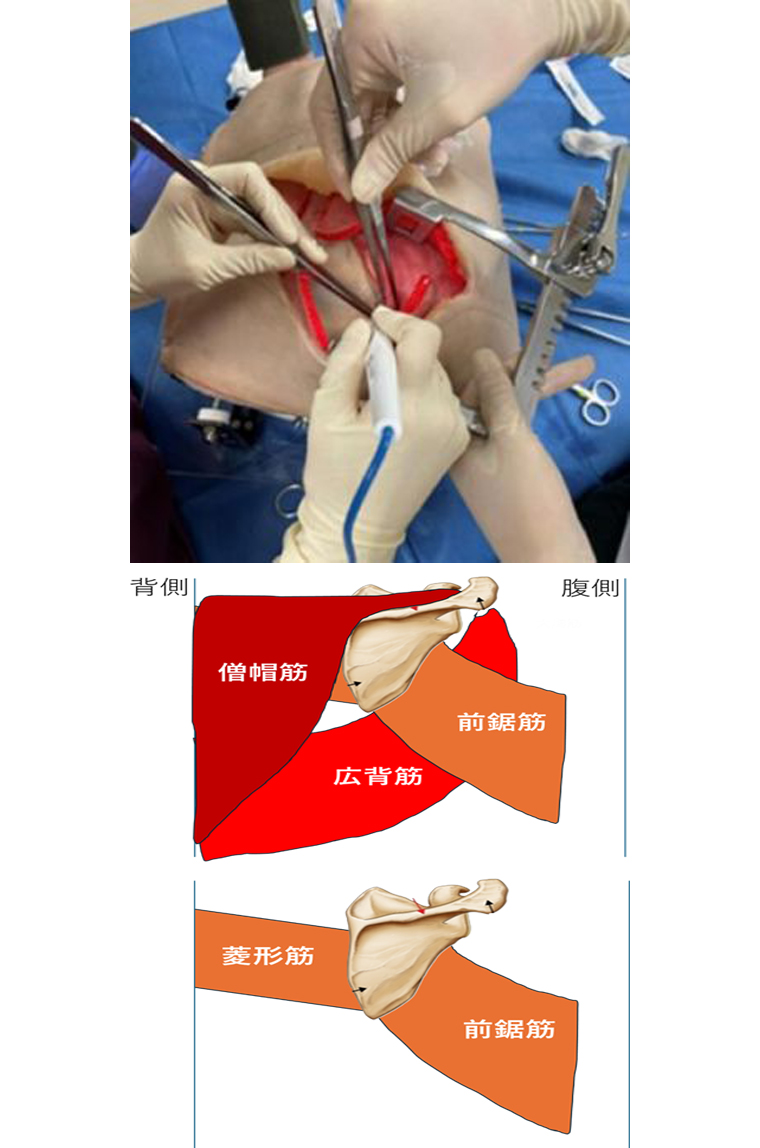
Researchers at Kobe University’s Graduate School of Medicine Department of Medical Device Engineering, Division of Medical Engineering Innovation (Part-time Lecturer and Visiting Professor Yugo Tanaka, and Specially Appointed Professor Takahiro Yasuda) have jointly developed a chest wall model for thoracotomy training in collaboration with WetLab Incorporated (Headquartered in Otsu, Shiga Prefecture; CEO/President Yoshio Okano).
This chest wall model is the world's first open thoracotomy training model developed that focuses on both ease of use and realistic simulation. In the field of thoracic surgery where minimally invasive medical procedures, including robotic surgery and video-assisted thoracoscopic surgery(VATS) have become standard in thoracic surgery, opportunities to gain experience with open surgery have diminished. This model offers especially valuable training opportunities for early-career physicians with limited exposure to open thoracotomy, thereby enhancing the quality and safety of patient care.

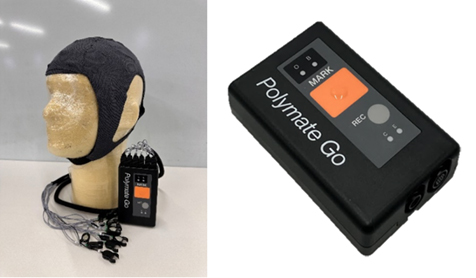
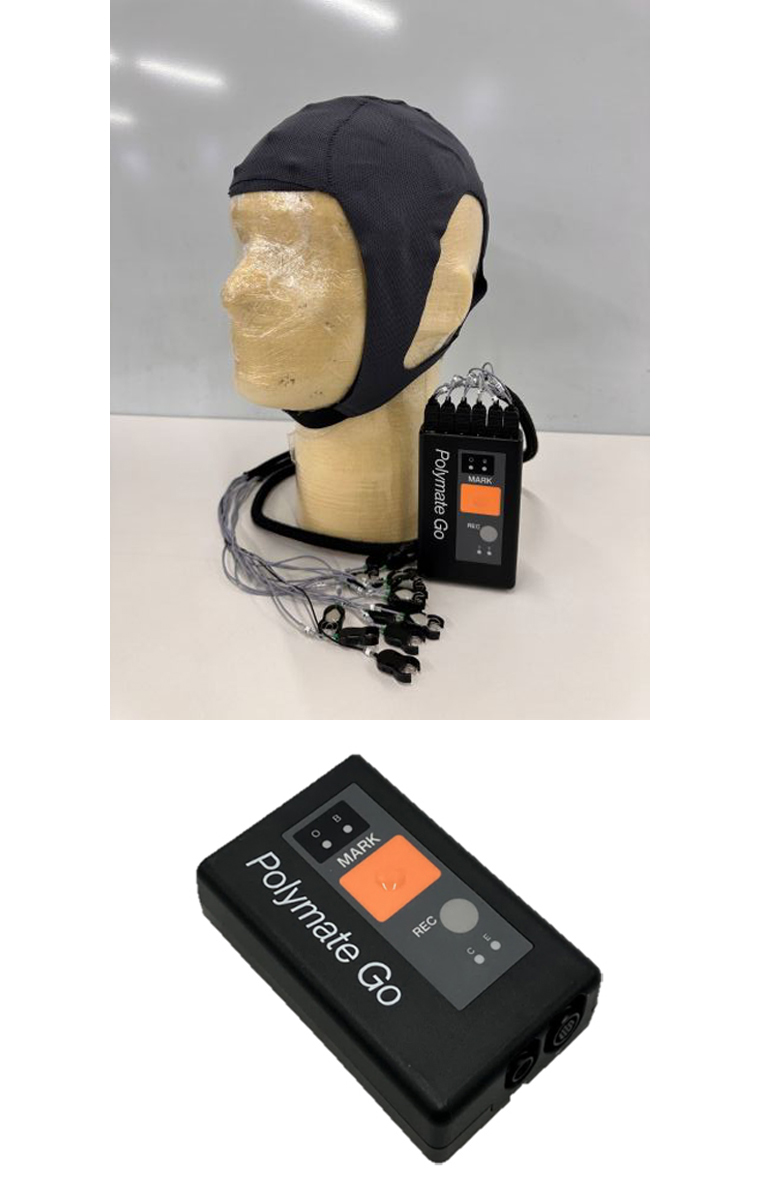
Kobe University’s Graduate School of Medicine, Division of Medical Device Systems, (Specially Appointed Professor Takahiro Yasuda), in collaboration with the Department of Clinical Neurology, Graduate School of Medicine and Faculty of Medicine, Kyoto University (Professor Riki Matsumoto), and Miyuki Giken Co., Ltd. (Head Office: Bunkyo-ku, Tokyo: President and Representative Director: Ryuzo Mase), has jointly developed the "Polymate Go," a wearable electroencephalography (EEG) system expected to enable continuous EEG monitoring in settings that more closely reflect patients' everyday living environments.
This achievement represents a successful example of translating research outcomes generated at a university into a medical device that can be used in actual clinical practice. The technology is expected to contribute to the advancement of home healthcare and community-based medicine.
| Dimensions: | 114.5(H)×72(W)×28(D)mm |
| Weight: | 200 g (including battery) |
| Continuous operating time: | Approximately 8 hours when the wireless function is in use Approximately 12 hours when the wireless function is not in use *Based on the use of the recommended lithium-ion battery |
| Biopotential electrode inputs (referential): | 9 channels |
| Biopotential electrode inputs (bipolar): | 1 channels |
| Input impedance: | 100 MΩ or greater |
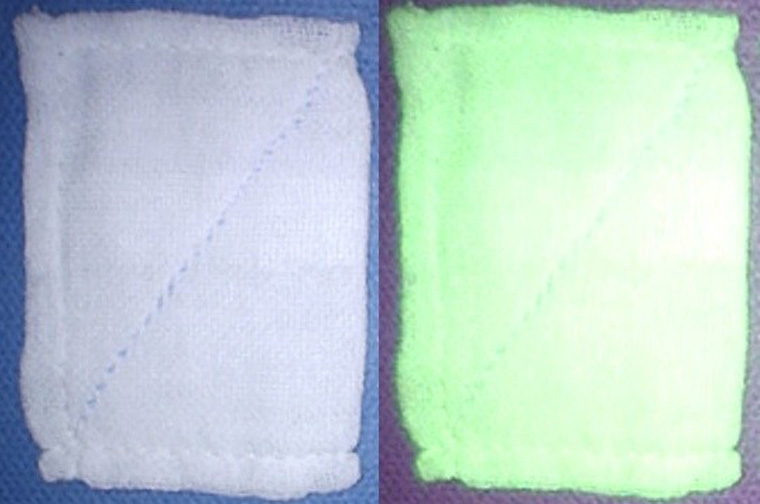
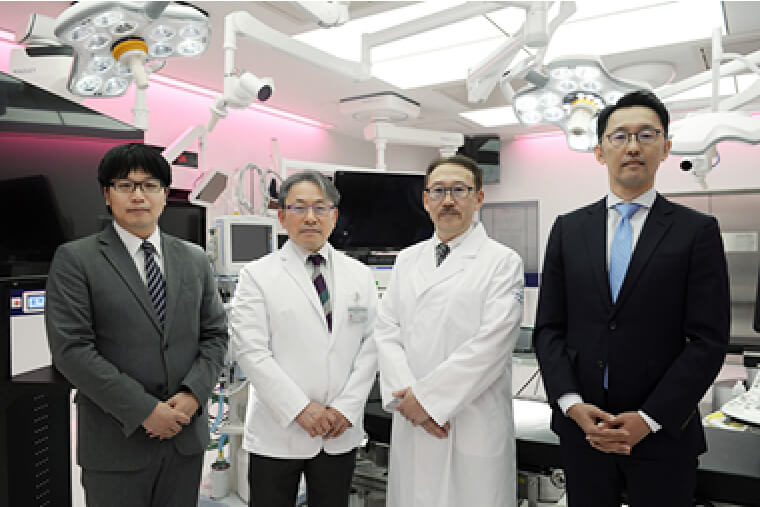
The Department of Hepato-Biliary-Pancreatic Surgery, Graduate School of Medicine, Kobe University (Professor Takumi Fukumoto) and VITA CORPORATION (Headquarters: Kobe, Hyogo, Japan; CEO: Shinobu Tsuchida), in collaboration with Osaki Medical Corporation (Headquarters: Nagoya, Aichi; President & Representative Director: Masao Osaki), have jointly developed and commercialized the “ICG Fluorescent Gauze,” aimed at reducing the risk of retained gauze in laparoscopic and robot-assisted surgeries . The product has now been launched and is available for clinical use.
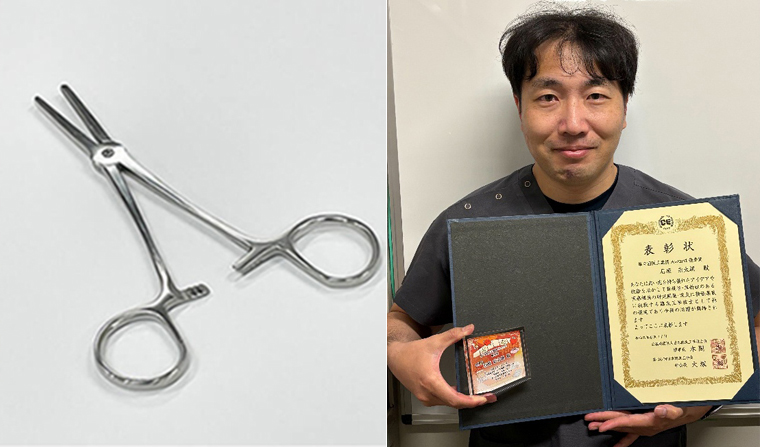
Mr. Sotaro Ishihara of the Department of Clinical Engineering, Kobe University Hospital, in collaboration with Nara Seiko INC., developed the Safety Forceps, a medical device intended to prevent the inadvertent cutting of dialysis tubing in clinical dialysis practice. The device (Medical Device Notification No. 29B1X00001000102) became commercially available in March 2026.
Mr. Sotaro Ishihara was also awarded the Excellence Award at the 9th Medical–Engineering Collaboration Award, in recognition of his achievements in the development and refinement of medical devices and healthcare tools that improve patients' quality of life, enhance the efficiency of healthcare professionals, and advance safety in medical practice.
On June 23, 2023, Harvard Business Review published an interview article titled “Medical Device Innovation through the Japanese-Style Ecosystem” featuring Kobe University.
Professors Takahiro Yasuda and Yoshihiro Muragaki from the Graduate School of Medicine Department of Medical Device Engineering and the Center for Advanced Medical Engineering Research & Development (CAMED), discussed the formation of a Japanese-style ecosystem and the future direction of innovative medical device development.
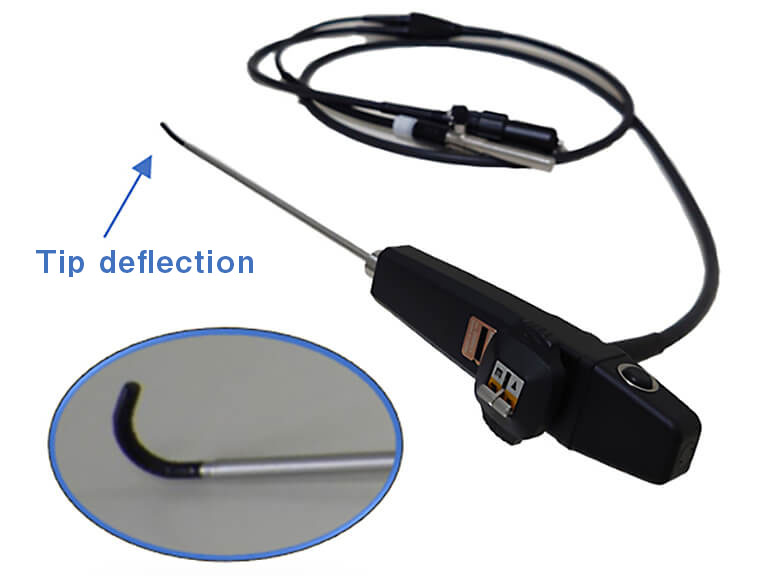
On June 26, 2023, Nipro Corporation and its subsidiary, MACHIDA Endoscope Co., Ltd., together with Professor Kenichi Nibu from the Department of Otolaryngology–Head and Neck Surgery, Part-time Lecturer Dr. Go Inokuchi from the Division of Medical Device Systems, Department of Medical Device and Systems Development, Graduate School of Medicine, and Specially Appointed Professor Yoshiaki Fujiwara from the Device Development Promotion Division of the Kobe University Center for Advanced Medical Engineering Research and Development, announced the joint development of an otolaryngology videoscope.
In collaboration with Terumo Corporation, we successfully expanded the clinical application of the OFDI (Optical Frequency Domain Imaging) Intravascular Imaging System, which uses near-infrared light to visualize cross-sectional images of blood vessels. Previously, its use had been limited to the coronary arteries of the heart. However, in June 2021, regulatory approval under Japan’s Pharmaceuticals and Medical Devices Act (PMD Act) was obtained for use in the lower limb arteries—from the thigh to below the knee—and in November of the same year, the system was approved for insurance coverage. Among optical coherence-based diagnostic devices employing similar principles, the OFDI system became the first in Japan to receive approval for use in lower limb arteries. The project was initiated by the hospital’s Department of Cardiovascular Medicine and achieved approval following a physician-led, multicenter clinical trial.
On October 10, 2020, the final round of the 3rd MedTech Grand Prix KOBE, a contest focused on next-generation health and medical technologies, was held with 12 finalist teams selected from 106 applicants. The team “Protect Kid’s Brain,” led by Professor Hiroaki Nagase (Department of Pediatrics, Division of Pediatric Acute Diseases, Graduate School of Medicine, Kobe University), presented their project under the theme “Protecting Children’s Brains and Hearts from Non-Convulsive Epileptic Seizures.” The team received the ExaWizards Award, presented by the sponsor company ExaWizards Inc., and also won first place in the audience vote. This project is being advanced through medical-engineering collaboration with Professor Zhiwei Luo from the Graduate School of System Informatics. Moving forward, the team plans to integrate the software into existing electroencephalography (EEG) devices and evaluate its performance in clinical settings.
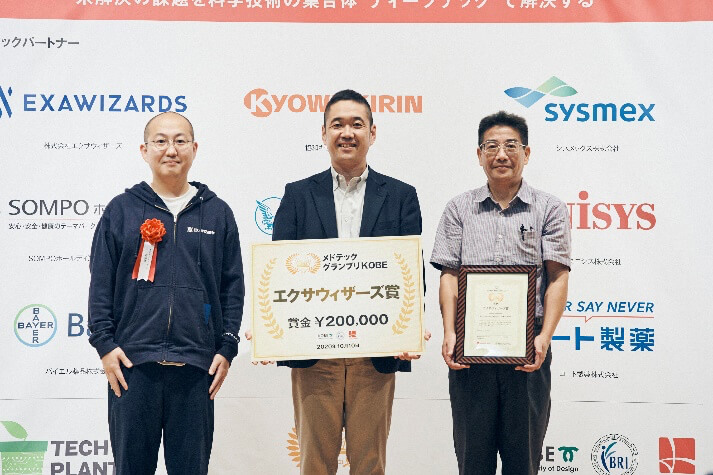
(Photo: From left — Mr. Ko Ishiyama, President and CEO of ExaWizards Inc.; Professor Hiroaki Nagase; Professor Zhiwei Luo.)
On August 6, 2020, Professor Tomoo Ito of the Department of Pathology and Division of Diagnostic Pathology, Kobe University Hospital, and Matrix Co., Ltd. jointly developed an active mask designed to help prevent infections such as the novel coronavirus (COVID-19) in medical and clinical settings.
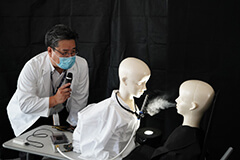
Hiroshi Kato, Deputy Director of the Medical Technology Department at Kobe University Hospital, served as a member of the development team for the “Easy O₂ Tiger,” a timer specifically designed for medical oxygen cylinders released by Shinwa Industrial Co., Ltd. He was responsible for identifying and analyzing medical needs throughout the development process.
On June 11, 2020, Professor Tomoo Ito of the Department of Pathology and Division of Diagnostic Pathology, Kobe University Hospital, and Soda Kogyo Co., Ltd. announced the joint development of a clean unit designed to help prevent infections, including COVID-19, in various medical and clinical settings.
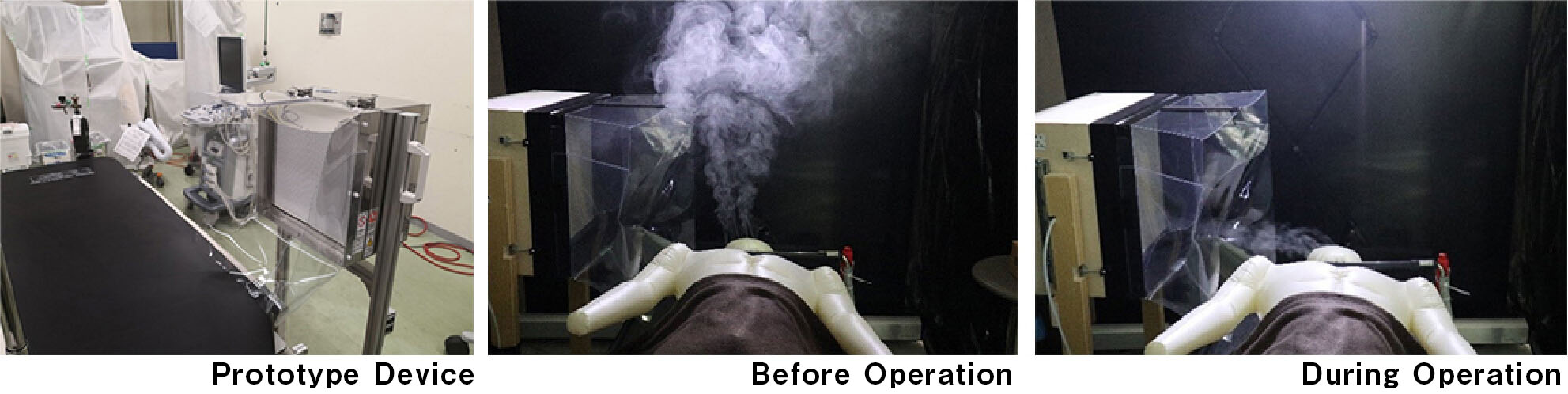
Professor Takumi Fukumoto (Department of Hepato-Biliary-Pancreatic Surgery) and Professor Ryohei Sasaki (Department of Radiation Oncology) at Kobe University Graduate School of Medicine, together with Alfresa Pharma Corporation, successfully developed the absorbable tissue spacer for radiation therapy, NESKEEP®. The device received regulatory approval in December 2018 and was launched commercially on June 27, 2019. In 2019, NESKEEP® was added to insurance coverage. After spacer placement prior to particle therapy became reimbursable, as of September 2023, spacer placement before X-ray therapy is also covered by insurance.
(Approval Number: 23000BZX00381000)
| Name of Course | Training Period | Number of Participants | Breakdown of Participants |
|---|---|---|---|
| Needs Exploration Training (1st Term) | November 2017 - October 2018 | 11 | 11 from companies |
| Medical Device Development Expert Training (2nd Term) | May 2018 - February 2019 | 12 | 11 from companies, 1 development support specialist |
| The 3rd MDP Training Program Entry Course I | October 2019 - March 2020 | 18 | 15 from companies, 3 healthcare professionals |
| The 3rd MDP Training Program Entry Course II |
June 2020 - April 2021 | 6 | 4 from companies, 2 healthcare professionals |
| The 4th MDP Training Program Entry Course I | November 2020 - March 2021 | 13 | 7 from companies, 6 healthcare professionals |
| The 5th MDP Training Program Entry Course I | May 2021 - November 2021 | 18 | 10 from companies, 5 healthcare professionals, 1 engineering researcher, 1 development support specialist, 1 medical student |
| The 4th MDP Training Program Entry Course II | November 2021 - August 2022 | 13 | 7 from companies, 4 healthcare professionals, 1 engineering researcher, 1 development support specialist |
| The 6th MDP Training Program Entry Course I | May 2022 - July 2022 | 14 | 9 from companies, 3 healthcare professionals, 1 engineering researcher, 1 engineering student |
| The 5th MDP Training Program Entry Course II | November 2022 - August 2023 | 7 | 4 from companies, 1 healthcare professional, 1 engineering student, 1 medical student |
| The 7th MDP Training Program Entry Course I | May 2023 - June 2023 | 24 | 13 from companies, 9 healthcare professionals, 2 development support specialists |
| The 6th MDP Training Program Entry Course II | November 2023 - March 2025 | 4 | 3 from companies, 1 healthcare professional |
| The 8th MDP Training Program Entry Course I | May 2024 - August 2024 | 15 | 10 from companies, 3 healthcare professionals, 1 development support specialist, 1 medical student |
| The 7th MDP Training Program Entry Course II | November 2024 - (currently in progress) | 5 | 2 from companies, 3 healthcare professionals, |
| The 9th MDP Training Program Entry Course I | May 2025 - July 2025 | 16 | 10 from companies, 4 healthcare professionals including 2 working graduate students, 1 development support specialist, 1 agriculture student |
| Total | 176 | 116 from companies, 44 healthcare professionals, 7 development support specialists, 3 engineering researchers, 3 medical students, 2 engineering students, 1 agriculture student | |
* "Needs Exploration Training (1st Term)” and “Medical Device Development Expert Training (2nd Term)” were the predecessor programs of the MDP Training Program Entry Courses I and II.
* "Needs Exploration Training (1st Term)” and “Medical Device Development Expert Training (2nd Term)” were the predecessor programs of the MDP Training Program Entry Courses I and II.
